As a voracious reader, I measure my year in books. Also, by political happenings, because I'm involved in politics. I started a Goodreads account late in 2017, so this is the first time I can track my reading throughout an entire year.
January
 In January, I reread the Dragonkeeper Chronicles, the inspiration for my all-time favorite series ever, Ilyon Chronicles. I really missed the characters (namely Bardon the Amazing), so it was nice to be able to come back to them. I finished rereading A Wrinkle in Time so I could review it before the new movie that I didn't want to watch came out. I reread The Lost Stories (Rangers Apprentice) and By Darkness Hid, because I really love both of those stories (though The Lost Stories is not my favorite Rangers Apprentice). I read Wonder for the first time, and loved it. I also read The Poison Kiss, a couple of Star Wars books, the last three Series of Unfortunate Events books, four books about biological warfare (for writing research, obviously), an indie published zombie book, and October, which is very impactful and unforgettable.
Book of the Month: October.
February

I read twenty books in January. In February, I read two. That's right, two. And one of them doesn't even count, because it was a drawing book. I checked out How to Draw Incredible Ocean Animals so I could draw an otter for a logo of a book review blog I'm probably not going to keep up. Also, I read Auggie and Me. It was good, but I have no idea why it took up the entire month. I really enjoyed Julian's chapter, and how he wasn't being mean to Auggie because he hated him, but because he was scared of him.
Book of the Month, by default: Auggie and Me.
March

Book of the Month: Exiles. Because Exiles. 😍😍😍😍😍😍
April
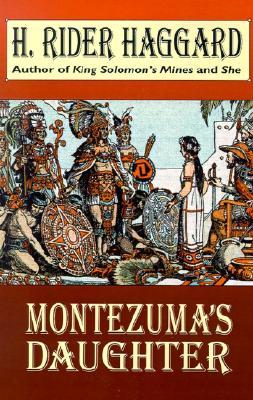 In April, I finished a lot of school books. Advanced math (of which I will have no more until college algebra), physics, an incredibly dumb book about Christopher Columbus, Man, Economy, and State, Desiring God, The Normal Christian Life, Human Action, Much Ado About Nothing (It really is about nothing; it was the most boring Shakespeare play I've read), Standish of Standish, Monezuma's Daughter (of which I read half in one day), The Fifth of March, The Real Benjamin Franklin, and Voyager's Tales, from which book I remember almost nothing except some Muslim government official paid one guy quite a bit in gold to stand by him all day and occasionally hold his cloak. I want a job as easy as that. On the fun side of things, I finished rereading the Blood of Kings trilogy, reread The Royal Ranger and didn't hate it so much this time (but I will never forgive John Flanagan for killing her), and reread a sweet short story collection about two people falling in love. I read the entire Maze Runner trilogy, accidentally stumbling into another zombie book. I keep doing that, which is weird, because I don't really like zombie fiction. The series was honestly pretty disappointing. My favorite book was the prequel with none of the main characters in it. I also read If I Live (another good Terri Blackstock book), a bunch of picture books, and reread Mary Ware in Texas and A Captain's Heart (or at least most of it).
Book of the Month: Montezuma's Daughter. Because "Heart to heart, though far apart" doesn't really count if you've been chosen as a sacrificial victim by a bunch of Aztecs. Also, Henry Rider Haggard does the whole "Native-American-culture-being-destroyed-by-outsiders-as-witnessed-by-the-European-adopted-into-the-tribe" story line better than most people.
May
 Once upon a time, an innocent young reader picked up the book The Kestrel from the library and read it, unaware that it was the second book in a trilogy. Needless, to say, I was hopelessly confused, even after reading the first and third books. I later bought the first and third books at a library book sale (but frustratingly, they didn't sell their copy of The Kestrel. If they had, my whole set could have matched), but for the longest time could not find the second. Last year, I finally got it, and, for the first time, read the whole series in order, which happened in May. It makes so much more sense now! I also read a couple of books for a research paper about British soldiers during the American Revolution, another amazing Beverly Cleary YA book, and a picture book and a Lois Lowry book I bought at a library book sale. At the very end of the month, I reread Cinder and Scarlet because I bought Cinder at a library book sale and I love Kai. I read the books where Nanny McPhee came from, The Strange Case of Dr. Jekyll and Mr. Hyde (which would have been so mysterious if everybody on planet Earth didn't know the big plot twist), The Summer of Broken Things, The Penderwicks at Last (Baffrey forever!), and Dagger's Sleep. Dagger's Sleep was so good. It's basically a genderbent Sleeping Beauty in a fantasy world with a Native American feel. So cool. Even though I totally shipped the wrong ship with this one, I enjoyed it anyway. It's so beautiful. And I want more Alexander. Also, I started reading War and Peace this month because I made a New Year's resolution to myself to read it over the summer.
Book of the Month: Dagger's Sleep. This isn't the cover I read it with, but I love this one so much more.
June
 I started out this month reading Cress and Winter (my poor Wolf baby 😢😢😢😢), and War and Peace, of course. I read the second Elsie book and a picture book, listened to The Penderwicks at Point Moutte (poor Jeffrey), and listened to an audio drama of The Fellowship of the Ring. AND TOM BOMBADIL WAS CUT OUT AGAIN!!! WHY DOES THIS KEEP HAPPENING???? Also, it was really weird for Ian Holm to play Frodo. My sister brought home The War That Saved My Life, and I thoroughly enjoyed it. The Bottle Imp was a very interesting short story by Robert Louis Stevenson. My mom made me read When God Writes Your Love Story and it was great. And I beta-read Bitter Winter and it was amazing.
Book of the Month: Bitter Winter. Because Ilyon. And Jace is my baby.
July
 I read some really good books this month, and one REALLY awful one. You know, the kind where the more you think about it, the more you hate it? It wasn't even remotely scientifically plausible, or written well, but it was still horrific and will haunt me forever. It's supposed to turn people against abortion (how? abortion is illegal in the world of this book), but all it really accomplishes is scaring people away from organ donation. Seriously? The underlying message of this book? "Organ donation is creepy because if you give someone a kidney they'll share your soul." Um, what? Enough about Unwind, though. I read the sequel to The War That Saved My Life (so good), On the Far Side of the Mountain (kind of lame, and I hated the stupid decision of letting Frightful go free. She's lived all her life as a pet! She'll die on her own), Clifford's First Autumn (don't ask why, I don't remember), and reread To Kill a Mockingbird out loud with my family. To Kill a Mockingbird is so good, and not actually about racism or Tom Robinson or his trial. It's about Scout Finch growing up and about Boo Radley. And it's amazing. I beta-read Lacy, which is really good even though it didn't have Jace in it. Here's my full review, if you want to read it. I reread The Lightning Thief and Old Yeller, then read the sequel Savage Sam for the first time, in which Travis get tortured by Indians! Also, I was still reading War and Peace, obviously. My grandpa told me this month I'd be thirty before I finished it, but he was proven wrong. Not this month, though. It is over a thousand pages, after all. I'm no Charlie Brown.
Book of the Month: To Kill a Mockingbird, because it's amazing. Honorary mention of Lacy, because Ilyon.
August
 School started back, so I read several books because of that this month. Are You Liberal, Conservative, or Confused? (confused; labels can mean anything nowadays), The Second Treatise of Government (though I would have read that one for fun), The Children of the New Forest (gotta love classism), and Savior or Servant? Putting Government in its Place (disappointingly, the book never delivers on the title). I reread The Destiny of a Galaxy, The Arm of a Starfish (I love Adam Eddington), and Tarzan of the Apes (more classism and some racism, but I love the book anyway). We read My Side of the Mountain as a family, and it wasn't as big a hit as To Kill a Mockingbird. I had read the book myself a while ago, but the rest of my family hadn't. I read The Official SAT Guide 2018 (riveting, I know), The Worth of a King (which I beta-read most of), Orphan's Song (I finally finished it! I'd been meaning to read it for years), Love Defined (Dear non-fiction authors: please stop asking me to do activities at the end of each chapter; it's not going to happen), The Unexpected Life of Oliver Cromwell Pitts (which I did not know was part of at least a duology until I reached the end and it was a ciffhanger), A Little House of their Own (what can I say? I've never cared for the Caroline series), The Player King (I love books that bring back into memory obscure history stories I forgot), and The Battle of Hackham Heath. Yes, this was the first time I read it. I was avoiding it, afraid it would be boring, but the rest of my family suddenly got into Ranger's Apprentice for the first time, so when my sister brought it home from the library, I couldn't not read it. It wasn't as boring as I thought it would be, and I love spending time with Halt, Crowley, Duncan, Abelard, and baby Gilan.
Book of the Month: The Battle of Hackham Heath. Because Halt and Crowley. 'Nuff said.
September
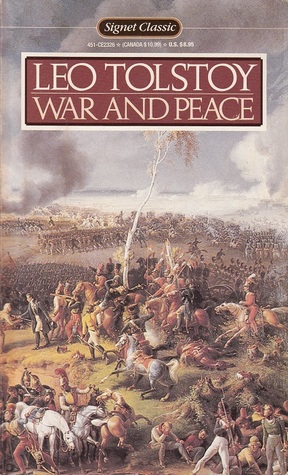 School books: Planned Chaos (snorezilla), The Real Thomas Jefferson (I relate to this guy: when he heard his house burned down, he immediately asked if his books were okay; sadly, they weren't), The Emergence of Liberty in the Modern World, a.k.a. when people finally stopped building theocracies, and The Real George Washington. I admire that man so much. He single-handedly saved America. Don't believe me? Just imagine what would have happened if he had taken up Alexander Hamilton's offer to lead the army against Congress and become king of America. The Red Fox Clan came out this month, and I'm glad John Flanagan's writing is getting better again, though we need more Will and Horace together. Sheesh. I reread From the Dark to the Dawn again, because I can't get enough of good stories about Ancient Rome. I read Star Wars: From the Adventures of Luke Skywalker and The Empire Strikes Back (don't judge). Wow, George Lucas is such a terrible writer! I can definitely see where the idea to put Leia in a metal bikini came from. Yeesh. But, it still being Star Wars, I enjoyed it nevertheless, especially the references to backstory that so clearly and obviously changed when George wrote the prequels. Also, Luke's nickname being "Wormy" never gets old. And I finished War and Peace! If you're wondering, yes, it's a novel, and yes, it's worth it. The story is all about the characters, though Tolstoy can philosophize a bit too much. I wasn't very happy that a certain character died, but it led to a better relationship than the current one, so I'm happy. Also, legitimizing illegitimate sons of nobility so they can inherit titles is a wonderful idea which I think certain authors should bestow on certain beloved characters.
Book of the Month: War and Peace. It's really good and it's really worth it.
October
 School books: The Social Contract (yikes), The Articles of Confederation (double yikes; not for the same reason, though, just...no wonder the country almost fell apart under these!), Walden (OHMYGOSH, why does this book exist? Read my review here), Liberty of Conscience, Common Sense (wow), Christian View of Men and Things (doesn't exactly deliver on the title, but I really enjoy philosophy, so I liked this book), The 5000 Year Leap, and Silas Marner. The part on the back cover doesn't happen until near the end. I really think it needs a new description. I read a lot of picture books, because my dad brought home a big box of free ones from his work and I read through them to decide if I wanted them. Also, my sister brought home Cat & Mouse: A Delicious Tale from the library just so we could see how bizarre it was. And it is bizarre. It's the strangest book I've ever read. Perhaps Jill and Eustace should have started craving Puddleglum after seeing Marshwiggle in the giant cookbook? And why call it a "delicious" tale? Is the prospect of eating your friends delicious? So weird. I finished Martin Chuzzlewit, which I'd been working on for a while. I didn't appreciate how he portrayed Americans, but other than that, it was a pretty good book. David Copperfield is still my favorite Dickens book, though. Also, we finished reading The Education of Little Tree as a family. It was certainly an interesting book.
Book of the Month: Cat & Mouse. Not because I liked it --I would never read this to a little kid-- but because it's just so bizarre it's ridiculously memorable. It's worth a read just to laugh and shake your head at. Also, Martin Chuzzlewit, because it was actually pretty good.
November
 School books: The Making of America, a wonderfully informative book about the US Constitution, Uncle Tom's Cabin, a good book that sadly furthers certain stereotypes, Democracy in America, a book that makes my eyes bleed because while de Tocqueville has great things to say, it's REPUBLICANISM, not DEMOCRACY, for crying out loud, and In the Valley, a riveting book about a Dutch New Yorker in the middle of the Revolution who is unfortunately somewhat racist. I read three Fancy Nancy books because I bought them from Goodwill, a picture book my sister bought about a fox traveling to Noah's Ark. I also read Bitter Winter again (an ARC this time), and Decree, the unexpected Christmas present from Tricia Mingerink, a.k.a., The Lost Stories of Acktar. IT WAS SO GOOD! I missed Leith and them so much, and love seeing their future. (Read my full review here.) And I'm beyond pleased there's going to be a sixth and seventh book to the series.
Book of the Month: Decree, because it was absolutely fantabulous and I can't pick Bitter Winter twice.
December
 School books: On Liberty, The Discovery of Freedom (amazing book), On the Origin of Species by Means of Natural Selection Or The Preservation of Favored Races in the Struggle for Life (what can I say? I like long titles), and The Federalist Papers. Also, the Anti-Federalist Papers, but I didn't add that one to Goodreads. I started research on Poland for a paper I'm writing, and read Poland and Iron Curtain: The Crushing of Eastern Europe 1945-1953 for that. I read Lacy again (ARC), read From the Mouth of Elijah (and started planning out a scathing review that I unfortunately have to finish the series to write), and Precisely Terminated, a really good book that the rude library people neglected to buy the sequels to. Don't they realize they're there so poor students don't have to buy good books? I reread Children of Exile and Children of Refuge so I wasn't totally lost when I read Children of Jubilee, which was fantastic, by the way. I received some free books I won in July, among them After, yet another zombie fiction I stumbled into. I really enjoyed this one, especially as this one was set in a fantasy world, so there's an excuse why they're not calling them zombies. Another one was Cora and the Nurse Dragon, a delightful children's book about raising dragons. I read Reflection, Part of Your World, A Whole New World, and As Old As Time, all part of the Twisted Tales series about AU plot threads in Disney movies. I really liked Reflection and Part of Your World, but hated A Whole New World (read my review here). As Old As Time was okay. I read The Girl With 500 Middle Names, which means I have only two more Haddix books to read before I've read them all. I read A Christmas Carol, as I do every Christmas season. It's a great way to spend Christmas Eve. I got Wonder for Christmas, so I read it again. After that, I read The Mysterious Benedict Society, because I had to read it since I just got it, and Mary Poppins, because we watched Saving Mr. Banks and Mary Poppins. The last book of 2018 was Tales of Ever After, another free book. It was a short story collection of fairy tale adaptations and very enjoyable.
Book of the Month: Precisely Terminated. The worst/best dystopian I've read. Panem's got nothing on this. At least Katniss has sunlight.
And that's it! I could always have written my year in politics instead, but that would be stressful, not fun. Even more stressful is the new year in politics. The presidential campaign has begun, after all. Bookswise, I don't know. I hope to read many good books, and not suffer another Unwind. Ugh. Merry Christmas and Happy New Year to everybody!
I read some really good books this month, and one REALLY awful one. You know, the kind where the more you think about it, the more you hate it? It wasn't even remotely scientifically plausible, or written well, but it was still horrific and will haunt me forever. It's supposed to turn people against abortion (how? abortion is illegal in the world of this book), but all it really accomplishes is scaring people away from organ donation. Seriously? The underlying message of this book? "Organ donation is creepy because if you give someone a kidney they'll share your soul." Um, what? Enough about Unwind, though. I read the sequel to The War That Saved My Life (so good), On the Far Side of the Mountain (kind of lame, and I hated the stupid decision of letting Frightful go free. She's lived all her life as a pet! She'll die on her own), Clifford's First Autumn (don't ask why, I don't remember), and reread To Kill a Mockingbird out loud with my family. To Kill a Mockingbird is so good, and not actually about racism or Tom Robinson or his trial. It's about Scout Finch growing up and about Boo Radley. And it's amazing. I beta-read Lacy, which is really good even though it didn't have Jace in it. Here's my full review, if you want to read it. I reread The Lightning Thief and Old Yeller, then read the sequel Savage Sam for the first time, in which Travis get tortured by Indians! Also, I was still reading War and Peace, obviously. My grandpa told me this month I'd be thirty before I finished it, but he was proven wrong. Not this month, though. It is over a thousand pages, after all. I'm no Charlie Brown.Book of the Month: To Kill a Mockingbird, because it's amazing. Honorary mention of Lacy, because Ilyon.
August
School started back, so I read several books because of that this month. Are You Liberal, Conservative, or Confused? (confused; labels can mean anything nowadays), The Second Treatise of Government (though I would have read that one for fun), The Children of the New Forest (gotta love classism), and Savior or Servant? Putting Government in its Place (disappointingly, the book never delivers on the title). I reread The Destiny of a Galaxy, The Arm of a Starfish (I love Adam Eddington), and Tarzan of the Apes (more classism and some racism, but I love the book anyway). We read My Side of the Mountain as a family, and it wasn't as big a hit as To Kill a Mockingbird. I had read the book myself a while ago, but the rest of my family hadn't. I read The Official SAT Guide 2018 (riveting, I know), The Worth of a King (which I beta-read most of), Orphan's Song (I finally finished it! I'd been meaning to read it for years), Love Defined (Dear non-fiction authors: please stop asking me to do activities at the end of each chapter; it's not going to happen), The Unexpected Life of Oliver Cromwell Pitts (which I did not know was part of at least a duology until I reached the end and it was a ciffhanger), A Little House of their Own (what can I say? I've never cared for the Caroline series), The Player King (I love books that bring back into memory obscure history stories I forgot), and The Battle of Hackham Heath. Yes, this was the first time I read it. I was avoiding it, afraid it would be boring, but the rest of my family suddenly got into Ranger's Apprentice for the first time, so when my sister brought it home from the library, I couldn't not read it. It wasn't as boring as I thought it would be, and I love spending time with Halt, Crowley, Duncan, Abelard, and baby Gilan.Book of the Month: The Battle of Hackham Heath. Because Halt and Crowley. 'Nuff said.
September
School books: Planned Chaos (snorezilla), The Real Thomas Jefferson (I relate to this guy: when he heard his house burned down, he immediately asked if his books were okay; sadly, they weren't), The Emergence of Liberty in the Modern World, a.k.a. when people finally stopped building theocracies, and The Real George Washington. I admire that man so much. He single-handedly saved America. Don't believe me? Just imagine what would have happened if he had taken up Alexander Hamilton's offer to lead the army against Congress and become king of America. The Red Fox Clan came out this month, and I'm glad John Flanagan's writing is getting better again, though we need more Will and Horace together. Sheesh. I reread From the Dark to the Dawn again, because I can't get enough of good stories about Ancient Rome. I read Star Wars: From the Adventures of Luke Skywalker and The Empire Strikes Back (don't judge). Wow, George Lucas is such a terrible writer! I can definitely see where the idea to put Leia in a metal bikini came from. Yeesh. But, it still being Star Wars, I enjoyed it nevertheless, especially the references to backstory that so clearly and obviously changed when George wrote the prequels. Also, Luke's nickname being "Wormy" never gets old. And I finished War and Peace! If you're wondering, yes, it's a novel, and yes, it's worth it. The story is all about the characters, though Tolstoy can philosophize a bit too much. I wasn't very happy that a certain character died, but it led to a better relationship than the current one, so I'm happy. Also, legitimizing illegitimate sons of nobility so they can inherit titles is a wonderful idea which I think certain authors should bestow on certain beloved characters.Book of the Month: War and Peace. It's really good and it's really worth it.
October
School books: The Social Contract (yikes), The Articles of Confederation (double yikes; not for the same reason, though, just...no wonder the country almost fell apart under these!), Walden (OHMYGOSH, why does this book exist? Read my review here), Liberty of Conscience, Common Sense (wow), Christian View of Men and Things (doesn't exactly deliver on the title, but I really enjoy philosophy, so I liked this book), The 5000 Year Leap, and Silas Marner. The part on the back cover doesn't happen until near the end. I really think it needs a new description. I read a lot of picture books, because my dad brought home a big box of free ones from his work and I read through them to decide if I wanted them. Also, my sister brought home Cat & Mouse: A Delicious Tale from the library just so we could see how bizarre it was. And it is bizarre. It's the strangest book I've ever read. Perhaps Jill and Eustace should have started craving Puddleglum after seeing Marshwiggle in the giant cookbook? And why call it a "delicious" tale? Is the prospect of eating your friends delicious? So weird. I finished Martin Chuzzlewit, which I'd been working on for a while. I didn't appreciate how he portrayed Americans, but other than that, it was a pretty good book. David Copperfield is still my favorite Dickens book, though. Also, we finished reading The Education of Little Tree as a family. It was certainly an interesting book.Book of the Month: Cat & Mouse. Not because I liked it --I would never read this to a little kid-- but because it's just so bizarre it's ridiculously memorable. It's worth a read just to laugh and shake your head at. Also, Martin Chuzzlewit, because it was actually pretty good.
November
School books: The Making of America, a wonderfully informative book about the US Constitution, Uncle Tom's Cabin, a good book that sadly furthers certain stereotypes, Democracy in America, a book that makes my eyes bleed because while de Tocqueville has great things to say, it's REPUBLICANISM, not DEMOCRACY, for crying out loud, and In the Valley, a riveting book about a Dutch New Yorker in the middle of the Revolution who is unfortunately somewhat racist. I read three Fancy Nancy books because I bought them from Goodwill, a picture book my sister bought about a fox traveling to Noah's Ark. I also read Bitter Winter again (an ARC this time), and Decree, the unexpected Christmas present from Tricia Mingerink, a.k.a., The Lost Stories of Acktar. IT WAS SO GOOD! I missed Leith and them so much, and love seeing their future. (Read my full review here.) And I'm beyond pleased there's going to be a sixth and seventh book to the series.Book of the Month: Decree, because it was absolutely fantabulous and I can't pick Bitter Winter twice.
December
School books: On Liberty, The Discovery of Freedom (amazing book), On the Origin of Species by Means of Natural Selection Or The Preservation of Favored Races in the Struggle for Life (what can I say? I like long titles), and The Federalist Papers. Also, the Anti-Federalist Papers, but I didn't add that one to Goodreads. I started research on Poland for a paper I'm writing, and read Poland and Iron Curtain: The Crushing of Eastern Europe 1945-1953 for that. I read Lacy again (ARC), read From the Mouth of Elijah (and started planning out a scathing review that I unfortunately have to finish the series to write), and Precisely Terminated, a really good book that the rude library people neglected to buy the sequels to. Don't they realize they're there so poor students don't have to buy good books? I reread Children of Exile and Children of Refuge so I wasn't totally lost when I read Children of Jubilee, which was fantastic, by the way. I received some free books I won in July, among them After, yet another zombie fiction I stumbled into. I really enjoyed this one, especially as this one was set in a fantasy world, so there's an excuse why they're not calling them zombies. Another one was Cora and the Nurse Dragon, a delightful children's book about raising dragons. I read Reflection, Part of Your World, A Whole New World, and As Old As Time, all part of the Twisted Tales series about AU plot threads in Disney movies. I really liked Reflection and Part of Your World, but hated A Whole New World (read my review here). As Old As Time was okay. I read The Girl With 500 Middle Names, which means I have only two more Haddix books to read before I've read them all. I read A Christmas Carol, as I do every Christmas season. It's a great way to spend Christmas Eve. I got Wonder for Christmas, so I read it again. After that, I read The Mysterious Benedict Society, because I had to read it since I just got it, and Mary Poppins, because we watched Saving Mr. Banks and Mary Poppins. The last book of 2018 was Tales of Ever After, another free book. It was a short story collection of fairy tale adaptations and very enjoyable.Book of the Month: Precisely Terminated. The worst/best dystopian I've read. Panem's got nothing on this. At least Katniss has sunlight.
And that's it! I could always have written my year in politics instead, but that would be stressful, not fun. Even more stressful is the new year in politics. The presidential campaign has begun, after all. Bookswise, I don't know. I hope to read many good books, and not suffer another Unwind. Ugh. Merry Christmas and Happy New Year to everybody!

